Chicken Coop Size Calculator
Last updated: October 6, 2026
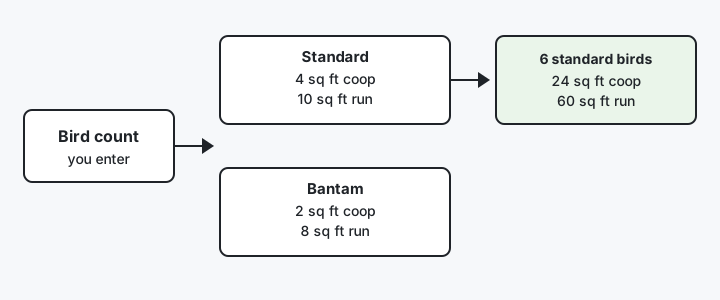
Quick answer. This calculator turns a bird count into coop square feet, run square feet, nesting boxes, and feed. Standard birds use 4 sq ft of coop and 10 sq ft of run. Bantams use 2 and 8, which is above the Penn State and Maryland minimum of 1 and 4.
Free coop build card — print it, 10 minutes.
Coop sizing calculator for backyard flock owners.
Tell us your flock. Get the coop and run square footage, monthly feed cost, nesting boxes, and winter ventilation — per the published extension-service standards, rounded up.
As an Amazon Associate I earn from qualifying purchases. The Amazon links below are affiliate links; they don't change the math.
The planning rate on this calculator: 4 sq ft of coop + 10 sq ft of run per standard bird. That 4 sits in the eXtension and UC Master Gardener range of about 3–4 sq ft indoors, and 10 sq ft outdoors is the figure both of those pages publish. Bantam rows on the Penn State and Maryland tables are 1 sq ft inside and 4 sq ft of run; this calculator uses 2 and 8, which is extra room above that minimum.
Every flock count, the bantam minimum, and the rule past 25 birds are on chicken coop size by flock size. Published breed weights do not change the 4 and 10 or the 2 and 8. They are on the chicken breed size and space chart.
Prefab coops on Amazon. Check the interior square feet against the flock size from this calculator before you trust the bird count on the label. walk-in coops on Amazon · 6–8 hen coops on Amazon
A standard laying hen eats about ¼ lb of layer feed per day. Here's what your flock goes through — and what it costs per egg.
Storing bulk feed? A 30-gallon metal trash can holds about 150 lb — a full pallet-order math check is in the feed cost guide.
Layer feed, gravity feeders, and rodent-proof storage cans on Amazon: treadle feeders on Amazon · rodent-proof cans on Amazon · layer feed on Amazon
Published guidance is one nest per 4 to 5 hens. This tab counts one per 3, which is tighter than that range. Hens still share a favorite box.
Nesting box kits, roll-out nest inserts, and fake ceramic training eggs on Amazon: nesting boxes on Amazon · ceramic eggs on Amazon
Adults rarely need heat — damp air is the winter killer, not cold. Size your high vents and brooder bulb here.
Coop thermostats, red brooder bulbs, and vent covers on Amazon: thermostat heat lamps on Amazon · red brooder bulbs on Amazon · vent covers on Amazon
How big should a chicken coop be?
Two numbers decide the build for standard birds. Coop interior — 4 sq ft per bird when they also have a run, which is the top of the 3–4 sq ft indoor range from eXtension and from the UC Master Gardener handout. Run — 10 sq ft per bird, the outdoor figure on both of those pages. Penn State and Maryland publish a lower indoor minimum (1.5 sq ft for laying hens, 2 sq ft for large chickens) and 8 or 10 sq ft of run. If the coop is the only space, give more floor than the 4 sq ft rate; those pages do not publish a "double it" rule. Bantams on the Penn State and Maryland tables are 1 sq ft inside and 4 sq ft of run. The floor plans at 4 and 10 work out to a 4×6 ft coop for 6 hens, an 8×8 for 12, and a 10×10 for 25.
Roost length is a separate constraint. Utah State Extension lists 6 to 10 inches of perch per bird, Penn State lists 6 inches for standard chickens, and Maryland lists at least 6 to 7 inches. At the 10-inch end of Utah's range, 12 hens need 10 ft of roost. Nests are separate: one per 4 to 5 hens on the UC, Maryland, and Utah pages. Hens still queue for a favorite box.
Methodology & disclosure: the calculator applies the rates named on this page in your browser. Standard birds use 4 sq ft and 10 sq ft, inside the published 3–4 and 10 figures. Bantam 2 and 8, and one nest per 3 hens, are tighter than the Penn State, Maryland, and Utah tables. Feed uses the quarter-pound figure from Alabama and Kentucky Extension. It is a planning estimate, not a measured result. Amazon links on this site are affiliate links; they do not change the math.
What size coop, run, and nest boxes does each flock size need?
| Flock | Coop sq ft | Run sq ft | Nest boxes | Feed / month |
|---|---|---|---|---|
| 3 hens | 12 | 30 | 1 | 23 lb (~1 bag / 2 mo) |
| 6 hens | 24 | 60 | 2 | 46 lb (~1 bag / mo) |
| 12 hens | 48 | 120 | 3–4 | 91 lb (~2 bags) |
| 25 hens | 100 | 250 | 7–9 | 190 lb (~4 bags) |
Standard-size birds, ¼ lb feed/day each, $22 per 50 lb bag as the default price.
Common questions, answered
How many square feet does a chicken coop need per chicken?
eXtension recommends a minimum of 3–4 square feet indoors and 10 square feet outdoors per laying hen. The UC Master Gardener handout says about 3–4 square feet of enclosed coop and about 10 square feet of yard. This site uses 4 and 10. Penn State and Maryland list a lower indoor minimum and an 8 or 10 square foot run. Their bantam row is 1 square foot inside and 4 square feet of run; the calculator's 2 and 8 is extra room above that row. Six hens at 4 and 10 need a 24 sq ft coop (roughly 4×6 ft) and a 60 sq ft run.
How many nesting boxes do I need for my hens?
Published guidance is one nest per 4 to 5 hens. Six hens need two boxes; twelve need three. Penn State starts with two nests for the first four hens, then one more per four additional hens, and says the box should be at least 12×12 inches. This calculator counts one box per 3 hens, which is tighter than the published 4-to-5 range. The one-per-5 setting matches the wide end of that range.
How much feed does a chicken eat per day?
Alabama Extension says a laying hen eats about 0.25 lb of feed per day (100 to 150 grams) and lists layer diets at 16% protein or more. Kentucky Extension states the same quarter-pound rule of thumb. That is about 7.5 lb a month, or one 50 lb bag per hen every 6–7 weeks. At the default $22 per 50 lb bag, that is about $0.11 of feed per hen per day. Those pages do not give a percent for bantams or for freezing weather.
Do chickens need a heat lamp in the winter?
Maryland Extension starts chicks at 90–95°F the first week and drops 5°F each week until they are five weeks old, with the lamp at least 18 inches above the floor. The housing pages cited here do not publish an adult cutoff such as −20°F or a 250 W bulb size. Minnesota's cold-weather page does say to add supplemental heat when the coop falls below 35°F, and Maryland's winter fact sheet says dry, wind-protected adults should not need it. Both sentences, and the site's own 20°F planning line, are on the winterizing section.
Common questions
Each answer is its own page. The link text is the question.
Coop size by flock
- Chicken coop size by flock size — the full table for 3 through 50 hens, the interactive count, and bantam minimums.
- How big should a chicken coop be for 6 hens? — prefab labels and the 24 + 60 sq ft build.
Bantams
- Bantam space versus standard hens — 1 sq ft inside and 4 sq ft of run, the published minimum.
Ducks and turkeys
- How much space do ducks need? — 5 sq ft indoors, with the 6-duck house linked from that page.
- How big should a duck house be for 6 ducks?
- How big should a chicken run be?
- How much space do turkeys need?
Roosts and feeders
- How much roost space per chicken?
- Bumblefoot in chickens — footpad injuries, wet litter, and when to call a vet. Not a perch-height claim.
- How much feeder space per chicken?
Winter, water, chicks, and new birds
- How to winterize a chicken coop — drafts, bedding, the 35°F disagreement, and ventilation without a published backyard fan size.
- Chicken coop fan and ventilation — the same page. These sources do not publish a fan CFM.
- How much feed does a chicken eat? — the quarter-pound rate run through the feed calculator, beside the other published totals.
- How to store chicken feed — metal can, plastic can, or pallet, depending on which extension page you follow.
- How much water does a chicken drink?
- Chicken brooder size — Maine floor space by age, not the adult coop.
- When to switch from starter to grower to layer
- How to feed baby chicks
- How to care for a broody hen
- How to introduce new chickens to your flock
Guides
Best chicken coops for 6 hens (2026)
What a 24 sq ft coop has to measure, prefab vs DIY vs kit, and the specs that matter — roost length, vents, predator latches. No prices.
What does it cost to feed backyard chickens?
Feed math per flock size, cost per egg, layer vs flock-raiser, and the storage setup that stops rodents eating your margin.
Do chickens need a heat lamp in winter?
Why vents beat heaters, the frostbite myth, brooder wattage by week, and how not to burn the coop down.
Chicken breed size and space chart
Adult weights, egg color, hardiness, and laying notes copied from extension and Livestock Conservancy pages. The calculator still uses standard or bantam.
Sources & Standards
Published references for coop space, nests, and feed:
- eXtension: Space allowances in housing for small and backyard poultry flocks
- UC Master Gardeners of Monterey Bay: Backyard chickens (2017)
- Penn State Extension: Small Scale Poultry Housing
- University of Maryland Extension: Housing Requirements
- Utah State University Extension: Housing Backyard Chickens
- Alabama Cooperative Extension: Feeding the Laying Hen
- University of Kentucky Extension ASC-191: How Much Will My Chickens Eat?